|
Greetings ,
Welcome to the December Issue of The Chiron Briefing
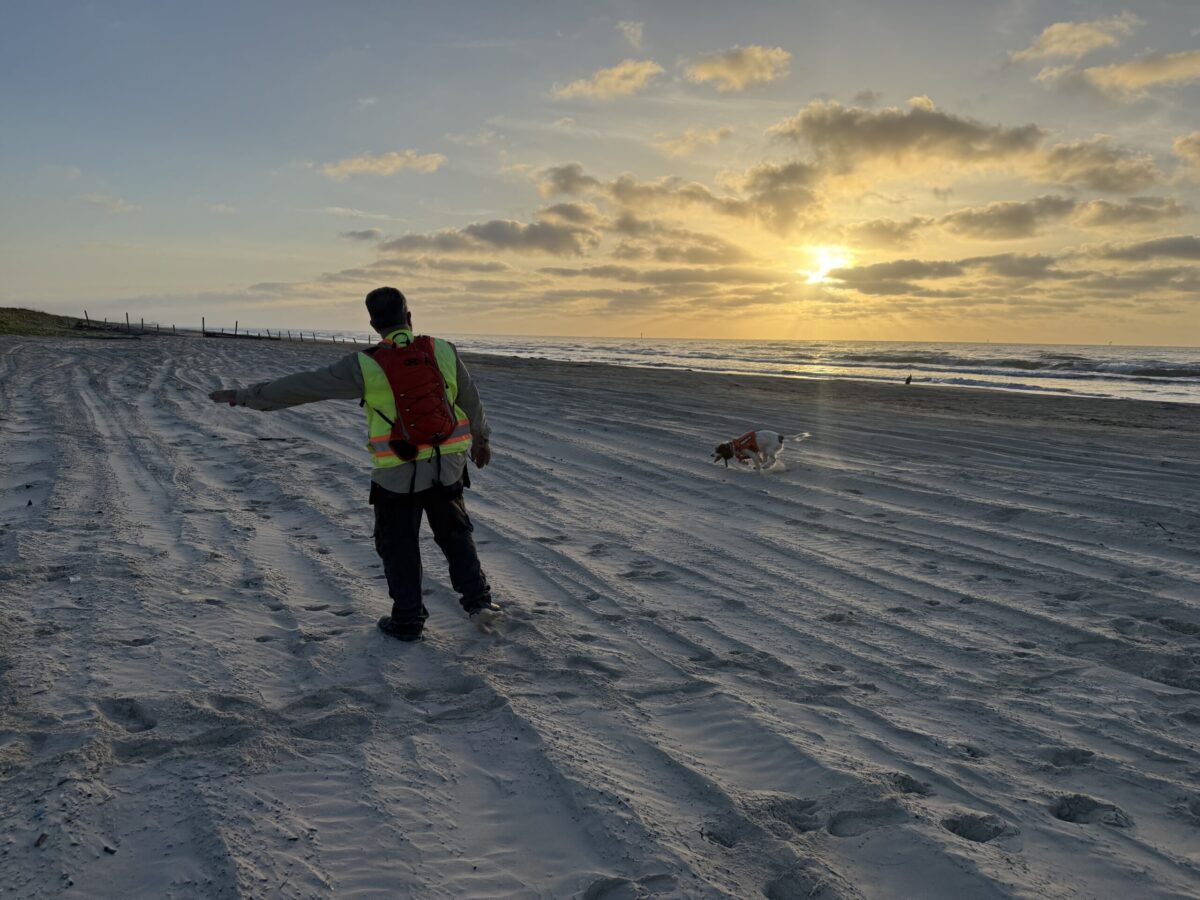
As we wrap up another busy year, I’m back in Texas after a whirlwind November filled with travel, workshops, and collaboration. The month took me from the UK and Poland—where I had the pleasure of teaching multiple detection workshops—to New Orleans for a conference presentstion, and finally to Yuma, Arizona, to collect a new training boat that will support ongoing research into canine detection of targets in open water.
December will bring a shift from travel to creativity, as I focus on writing a new workbook dedicated to the training of canines to detect buried targets, along with developing an accompanying online course for release in 2026.
As the year draws to a close, I want to thank everyone who has supported, trained with, and followed Chiron K9 throughout 2025. I wish you all a wonderful holiday season—may you find time to train, learn, and enjoy your canines wherever you are in the world.
-Paul Bunker and the Chiron K9 team |
| |
The Advantages of Using Variable Rewards in the Field |
| |
|
Using variable rewards in the field offers significant advantages for working detection canines, especially during long surveys or operational searches where multiple target finds may occur. In practical fieldwork, it simply isn’t feasible—or productive—to reward every detection with a high-value, high-energy toy reward. If the dog is locating several targets in rapid succession, repeatedly producing a toy can interrupt workflow, reduce search efficiency, and quickly fatigue or overstimulate the canine.
By incorporating variable rewards, the handler can maintain motivation while managing energy and maintaining the rhythm of the search. Lower-intensity rewards such as treats, verbal praise, physical affection, or even environmental rewards (e.g., such as continue the hunt, run a short stretch, or shake off after a water search) provide reinforcement without escalating arousal or disrupting the natural flow of the survey. These rewards keep motivation high while allowing the canine to remain in work mode.
The real power of variable reinforcement lies in its ability to build resilience, endurance, and sustained focus. When a dog understands that any alert may lead to a reward—but not every alert will trigger the “big payoff”—the dog continues to work with enthusiasm, anticipation, and emotional balance. This mirrors the naturally reinforcing uncertainty found in many working tasks and creates a dog that pushes through longer search durations without fading.
Using this system thoughtfully allows the handler to strategically deploy the high-value toy reward for key alerts, challenging environments, or particularly difficult finds, strengthening confidence and performance without exhausting the canine physically or mentally. In essence, variable rewards allow handlers to protect the dog’s welfare, maintain a smooth operational tempo, and enhance overall detection performance, especially during extensive field deployments where endurance and consistency are critical.
A fundamental protocol of this approach is the Reward Selection Assessment detailed in Novembers newsletter. |
| |
Why We Choose the Non-Stop Dogwear Fjord Overall Raincoat |
| |
|
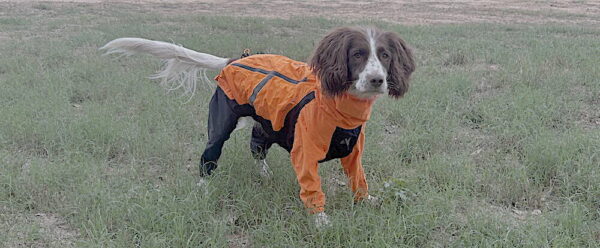
I absolutely recommend the Fjord Overall Raincoat from Non‑Stop Dogwear for working dogs. As someone who deploys working canines, especially the spaniels, in all kinds of weather, I’ve found that mine are rain magnets—every time it pours, they’re covered in mud and water in seconds. Additionally, the environments we are deployed to are rural, wet and muddy at times. These full-body raincoats have been a game-changer. When we’re on assignment, staying in hotels or working out of vehicles, the coats keep the dogs clean and dry, and that means our rooms, gear and vehicles stay cleaner too. The suit is fully waterproof with great adjustability, and it gives the dogs freedom of movement while protecting them from the elements. If you’ve got working dogs finishing tasks in wet or muddy conditions, this coat makes life a lot easier—for the dog and the handler.
Link to raincoat HERE |
| |
|
Oil Detection Canine, Poppy, in her Fjord Overall Raincoat |
| |
Protecting a Canines Soft Spots from Heat and Cold. |
| |
DIY Paw & Nose Butter for Working Canines
A simple, field-tested balm to protect and moisturize your canine’s paws and nose (and other sensitive areas)—perfect for harsh terrain, winter cold, summer heat, and long training days. I made this balm for use in the Canadian winter while working in the field. It protected the canine's paws and nose in the extreme cold (also used on the nipples and testicles when going through vegetation). I also use it on paws in hot climates to protect against the heat of the ground, especially on beaches where the sand is hot.
Ingredients
-
4 oz. (approx. 2 tbsp.) coconut oil
-
1 oz. (approx. 1 tbsp.) ethically sourced shea butter
-
4 tsp. beeswax
-
1 tsp. aloe vera gel (pure, 100%)
-
4–6 drops vitamin E oil (natural preservative + skin conditioner)
Instructions
-
Melt the base:
In a small pot or double boiler over low heat, melt the coconut oil, shea butter, and beeswax. Stir continuously until fully liquified and well blended.
-
Add the sensitive ingredients:
Remove the mixture from the heat. Stir in the aloe vera and vitamin E oil once the mixture cools slightly (this protects their beneficial properties).
-
Pour into containers:
Carefully pour the warm blend into lip balm tubes, small tins, or travel containers.
-
Let it set:
Allow the balm to cool at room temperature until completely firm. Cap and label.
-
Store properly:
Keep at room temperature and away from direct heat to prevent melting.
How to Use
Apply gently to dry noses, cracked paw pads, or as a protective layer before fieldwork.
Perfect for deployment bags, travel kits, or daily care of hard-working detection dogs.
Shelf life: 1–2 years when stored in a cool, dry place.
|
| |
Effects of training paradigm on dogs’ (Canis familiaris) acquisition and generalization of odors when trained with multiple explosives classes
|
| |
|
The study “Effects of training paradigm on dogs’ acquisition and generalization of odors when trained with multiple explosives classes” (Kane et al., 2025) examined how different training approaches affect the ability of detection dogs to learn and generalize multiple explosive odors. Twenty-two dogs were trained using one of three paradigms — Sequential, Mixture, or Inter-mixed — across four classes of explosives (RDX-based plastics, PETN-based detonation cords, ammonium nitrate, and TNT). Results showed that while all methods produced similar acquisition rates, Inter-mixed training significantly improved dogs’ ability to generalize to novel explosive variants, particularly for TNT and plastic explosives. However, this method also led to slightly higher false alarm rates compared to the other approaches. The findings suggest that inter-mixed training enhances operational flexibility by promoting broader odor generalization without substantially increasing training time, offering valuable insights for optimizing explosive detection canine programs.
Despite this research using explosive targets for the detection by canines the principles of the paradigms can be applied to any training program using two or more targets.
Download the paper HERE |
| |
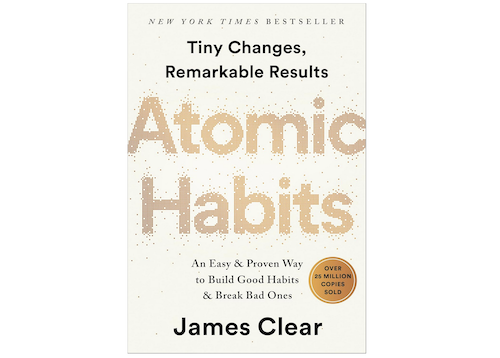
Atomic Habits by James Clear
|
| |
|
James Clear’s Atomic Habits is one of those rare books that bridges psychology, performance, and practical application in a way that resonates deeply with anyone committed to long-term improvement — including dog trainers. Those of you that have read my workbook, Imprint Your Detection Dog in 15 Days, or attended a workshop I have presented, will know I use James's lessons and quote them often. At its core, James’s message is simple: small, consistent actions compound into extraordinary results. He calls this the 1% rule — improving by just one percent each day eventually leads to exponential progress.
In canine training, this principle mirrors the way I structure my own programs. Whether imprinting a new odor, refining a search pattern, or developing independence in a detection dog, I focus on incremental progress rather than chasing perfection. Each training session doesn’t need to be groundbreaking; it just needs to move the team progressively forward. For example, when teaching a canine to indicate on a buried target or search from a boat, progress often comes from small adjustments — clearer reinforcement timing, better environmental setup, or improving the handler’s consistency. Over time, those 1% improvements add up to reliability and confidence in the field.
James also emphasizes that consistency matters more than perfection, which aligns perfectly with successful dog training. Too often, trainers rush toward the end goal — the perfect alert, the long search, or the certification — rather than following a structured progression plan. But as with habit formation, success in canine detection doesn’t come from a single “big” session; it’s the accumulation of hundreds of small, well-executed repetitions. Dogs thrive on routine and predictability, just as humans do when building lasting habits.
Lastly, Atomic Habits reinforces the importance of systems over goals. Goals define outcomes; systems define processes. In training, that means focusing less on “passing the test” and more on creating a holistic training approach that builds CONFIDENCE, RESILIENCE, and UNDERSTANDING in the dog. When we follow the process — using structured progressions, data tracking, and consistent reinforcement — success becomes inevitable.
For anyone serious about professional or personal development, Atomic Habits is a valuable reminder that mastery is built one small, deliberate step at a time. And for those of us in dog training, it’s a powerful validation that our best results come not from perfection, but from patience, structure, and consistency. |
| |
|
Looking to advance your skills in detection dog training and handling? Chiron K9 provides tailored mentoring (virtual and in-person), practical workshops, and expert conference presentations worldwide. Whether you’re seeking one-on-one guidance or group learning opportunities, our programs are designed to help you grow with evidence-based practices and real-world experience. |
| |
|
Thank you for reading this issue of The Chiron Briefing. If you enjoyed it, feel free to share it, forward it, or send me suggestions for future topics. Until next month—train well and take care.
Paul Bunker & the Chiron K9 team
|
| |
|