|
Greetings , from a chilly Scotland, where I’m currently leading a series of workshops. November is shaping up to be a busy month with sessions in Wales, Scotland, and Poland, a conference presentation in New Orleans, and a trip to California—via Arizona—to collect a new boat for our canine water search program.
In this month’s edition of The Chiron Briefing, we’ll share lessons from the field, highlight upcoming workshop opportunities (both virtual and field-based), and provide equipment reviews to keep you at the forefront of detection work. New in this issue, we’ve also added a book review and a science paper review to expand the learning and resources we bring to you.
Thank you for being part of this community. Let’s continue to learn, train, and push the boundaries together.
— Paul Bunker & the Chiron K9 Team |
| |
Why Chiron K9 Conducts Reward Selection Assessments with Every Dog |
| |
|
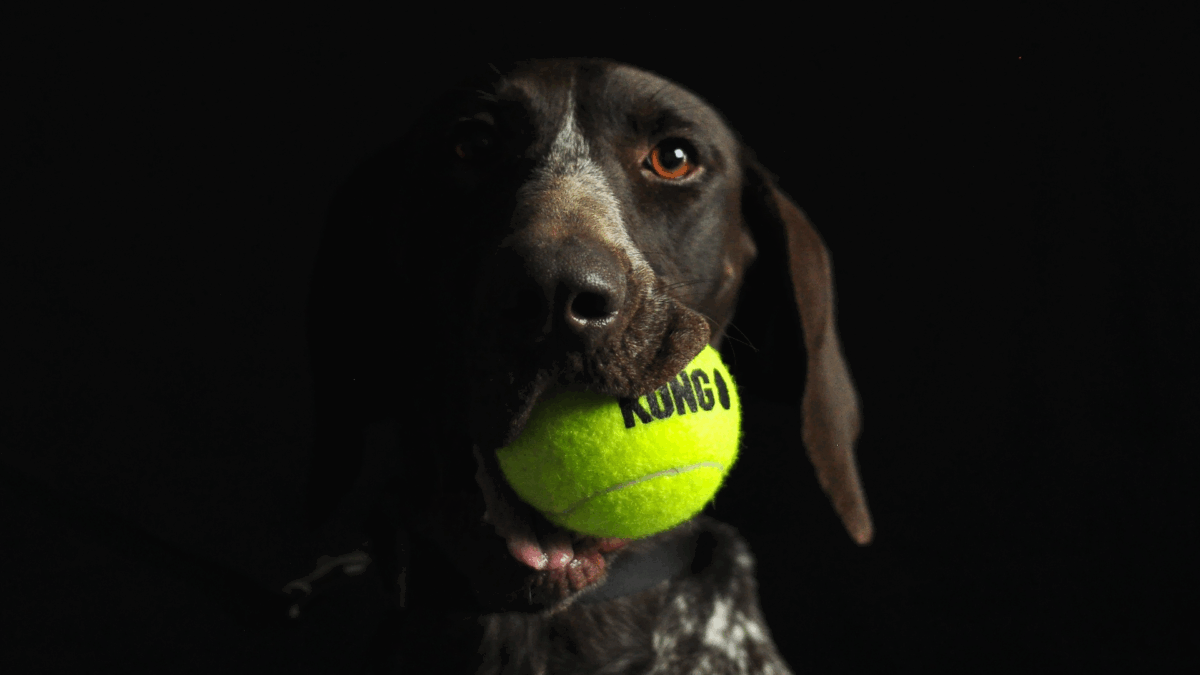
At Chiron K9, we believe that a solid foundation begins with understanding what motivates each individual dog. That’s why every canine we work with undergoes a reward selection assessment at the start of their training. This process identifies the type of reinforcement—whether toy, food, or a combination—that drives the strongest engagement and focus for that specific dog.
Not all rewards are equal. A dog that thrives on the chase of a ball may not respond with the same intensity to food, while another may work tirelessly for a high-value treat. By taking the time to evaluate and select the right reward system carefully, we ensure that training is not only practical but also enjoyable for the dog.
The result is a stronger human–canine partnership, more transparent communication, and improved reliability in the field. For us, it’s a simple yet essential step: understanding what motivates each dog is the key to building consistency, confidence, and long-term success.
We offer a FREE webinar HERE
|
| |
Why We Choose Mountain Ridge Dog Booties |
| |
|
At Chiron K9, our dogs often work in demanding environments—rocky terrain, abrasive surfaces, and extreme temperatures that can put their paws at risk. To protect them without compromising performance, we’ve selected Mountain Ridge dog booties as our bootie of choice.
These booties stand out because of their durability, secure fit, and comfort. They’re tough enough to withstand rough ground yet flexible enough to allow natural movement, ensuring that dogs can still work with precision and confidence. The design also minimizes slipping and rubbing, which is critical during long field days.
Most importantly, they’ve proven themselves in real-world conditions. Whether on hot South Texas soil or in wet, uneven terrain, Mountain Ridge booties keep our dogs safe, comfortable, and ready to perform. For us, it’s about choosing gear that supports both welfare and operational success. |
| |
|
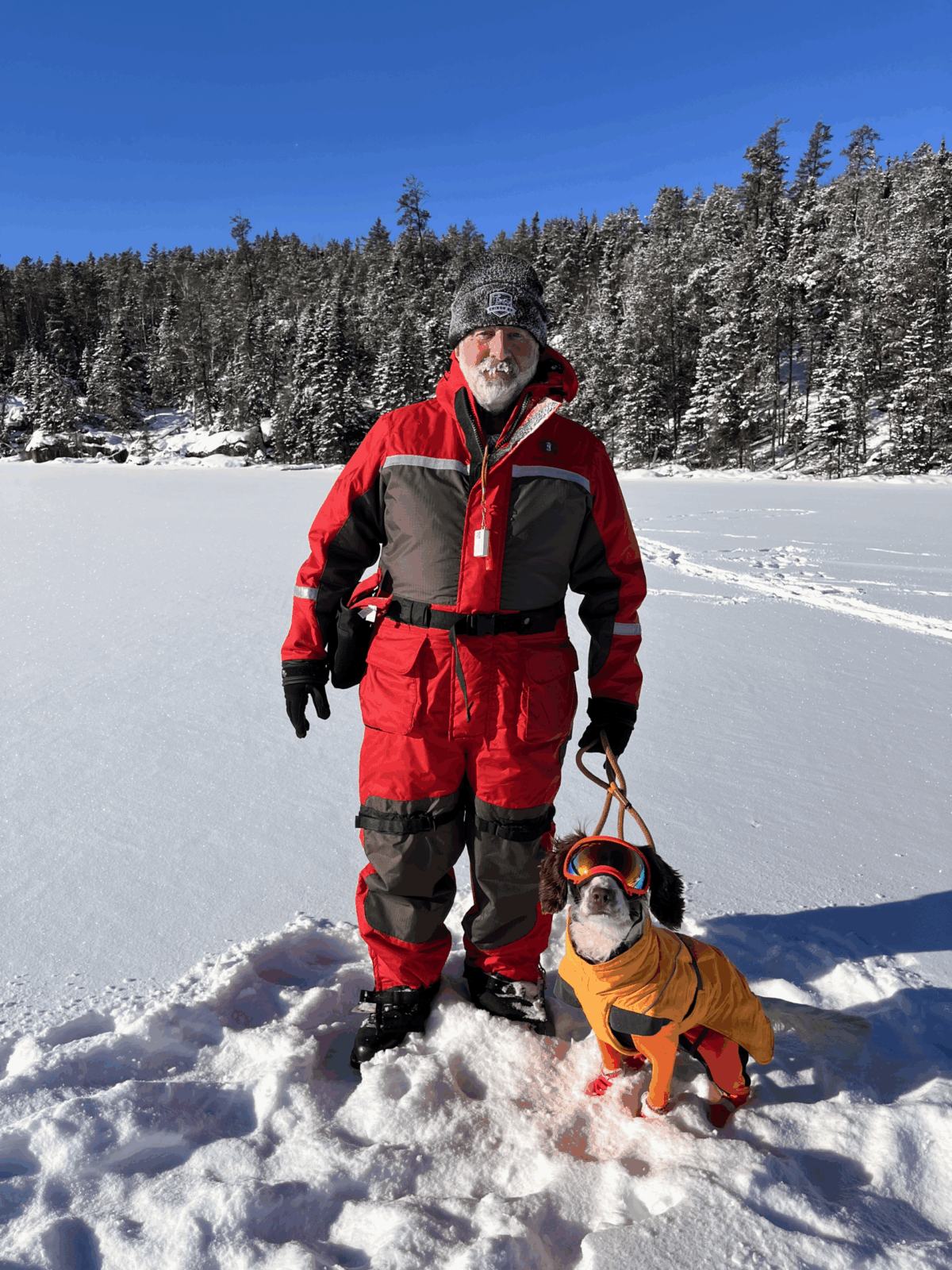
Paul Bunker and Oil Detection Canine, Poppy, during a research project in Canada |
| |
Heat Management in Detection Canines |
| |
|
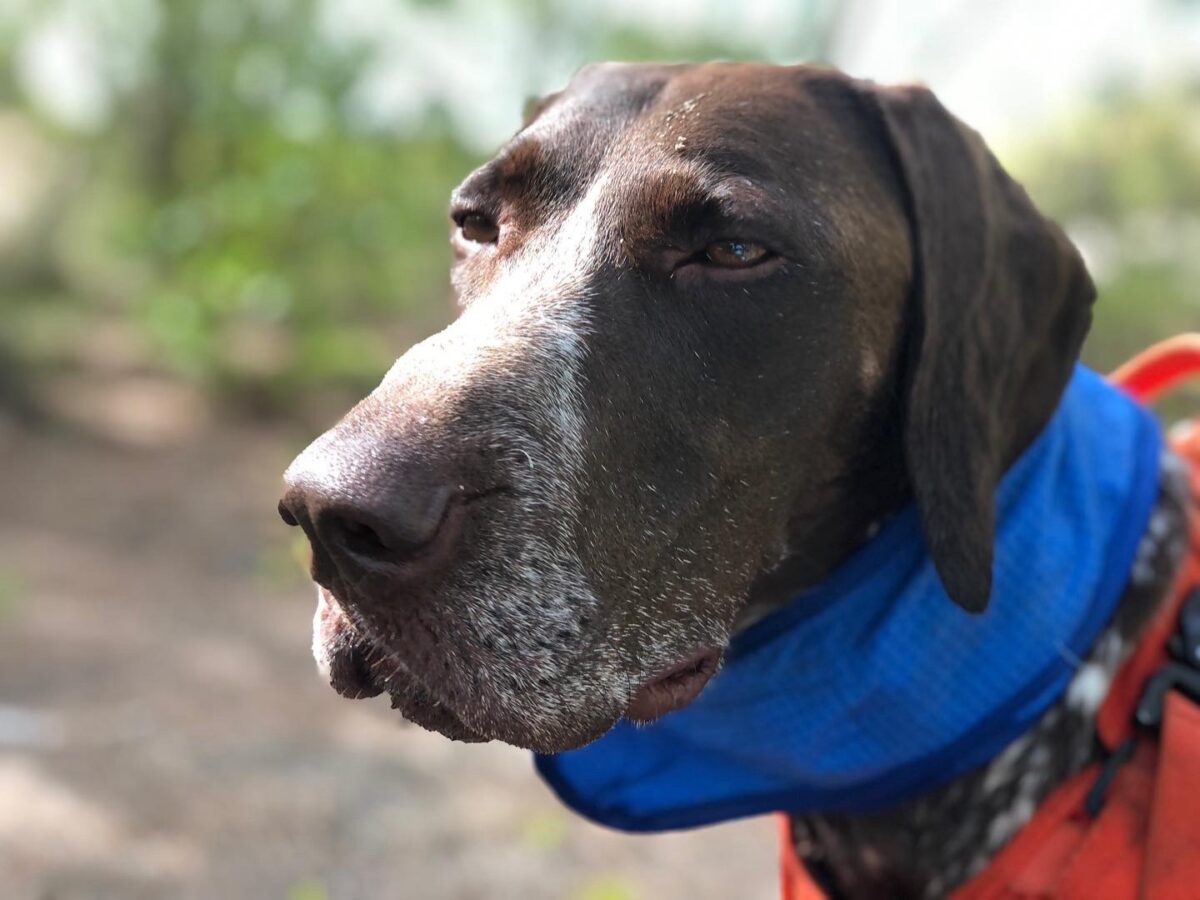
Iguana Detection Canine Pena in the British Virgin Islands |
| |
|
Working detection canines in hot environments presents unique challenges. In the field, their drive to work often overrides their ability to self-regulate, meaning it’s our responsibility to keep them safe and effective. At Chiron K9, we use several strategies to manage canine heat stress and ensure our partners can operate without risk of overheating.
Cooling Collars – These provide targeted cooling around the neck and throat area, where large blood vessels help regulate body temperature. We apply them during breaks or post-search to quickly bring temperatures down without disrupting the dog’s focus during work.
Temperature Monitoring Microchips – Implanted microchips that allow real-time monitoring give us precise data on core body temperature. Rather than relying solely on visual signs, handlers can make informed decisions in the moment about when to pause, cool, or stop work. This level of insight has been invaluable for preventing heat-related issues in the field.
Wetting the Neck – A simple but highly effective method. By wetting the dog’s neck and chest, we help dissipate heat through evaporation. Combined with shade and airflow, this technique is fast, practical, and can be repeated throughout the day.
Each of these tools contributes to a broader heat management plan. By being proactive, monitoring closely, and acting early, we ensure our detection canines remain safe, healthy, and mission-ready—even under the toughest conditions.
|
| |
The manipulation of odor availability of training aids used in detection canine training
Sloan et al. 2025
|
| |
|
Sloan et al. (2025) review the scientific principles that govern odor availability from training aids used in detection dog work, focusing on variables such as surface area, confinement, temperature, and diffusion. They argue that while many trainers have manipulated these factors intuitively, a more rigorous understanding is needed to optimize detection performance. By synthesizing prior research and theory, the authors provide practical guidelines for how end users can intentionally adjust odor presentation to improve canine training fidelity and consistency. Their work helps bridge the gap between olfactory science and operational detection practices.
Download the paper HERE |
| |
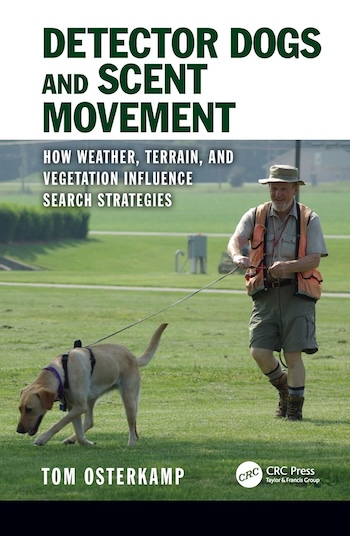
Detector Dogs and Scent Movement: How Weather, Terrain, and Vegetation Influence Search Strategies by Robert C. Osterkamp
|
| |
|
Osterkamp’s Detector Dogs and Scent Movement is an essential resource for anyone serious about detection work. The book provides a clear, evidence-based look at how scent behaves in real-world conditions, breaking down the effects of weather, terrain, and vegetation on a dog’s ability to locate target odor. What makes this book stand out is the way complex scientific principles are explained in practical terms, making the content accessible to handlers, trainers, and researchers alike.
For those working in conservation, security, or research detection, this book bridges the gap between theory and application, helping teams better understand why dogs perform the way they do in the field—and how we can adapt our strategies accordingly. It’s a must-read that has earned a permanent place on my shelf as both a reference guide and a source of continual learning.
|
| |
|
Looking to advance your skills in detection dog training and handling? Chiron K9 provides tailored mentoring (virtual and in-person), practical workshops, and expert conference presentations worldwide. Whether you’re seeking one-on-one guidance or group learning opportunities, our programs are designed to help you grow with evidence-based practices and real-world experience. |
| |
|