|
Greetings ,
Welcome to the October's Issue of The Chiron Briefing
I’ve just completed an incredible five-week tour around Australia, delivering workshops on the Detection of Buried Targets, All-Clear procedures, general detection, and problem-solving. A huge thank-you to all the hosts and participants who made the tour such a rewarding and memorable experience. I even managed to spend one of my days off watching humpback whales—an unforgettable highlight!
There’s no slowing down this month. First, I’m heading to Indiana to teach at the 2026 American Tactical K9 Association Conference. From there, I’ll travel to Montreal, Canada, to present our projects involving the detection of oil beneath water and ice at the 2026 International Oil Spill Science Conference (IOSSC). Then it’s on to the UK for another series of workshops.
I’m especially thankful to Christina for holding down the fort and continuing to train our project canines while I’m away. Her hard work and support make these trips possible and keep everything moving forward at home.
It’s shaping up to be another busy and exciting month, and I look forward to sharing the journey with you!
For now, I hope you enjoy this month’s updates from Chiron K9.
-Paul Bunker and the Chiron K9 team |
| |
Just Because They Find It: Doesn't Mean They Like It! |
| |
|
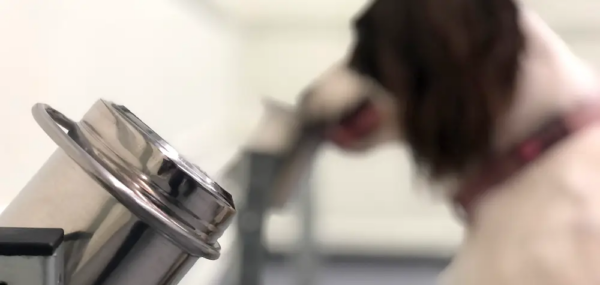
Just because a canine can detect a target odor does not necessarily mean it likes that odor.
The canine may enjoy the reinforcement associated with finding the target—the toy, food, praise, or opportunity to continue working—without finding the odor itself pleasant. Detection and odor preference are not the same thing.
This distinction can help explain a behavior sometimes seen during lineups. A canine may encounter the target odor, move away to investigate an odor it prefers, and then return to the target and give its trained response. The canine detected the target on the first pass but did not immediately respond.
This behavior may be mistaken for a missed target, uncertainty, or poor odor recognition. In reality, the canine may have recognized the target perfectly well but chosen to continue exploring before returning to the odor associated with reinforcement.
Handlers should therefore avoid assuming that every trained target odor is inherently attractive to the canine. Instead, consider the complete sequence of behavior:
Did the canine show a change of behavior when it first encountered the target?
Did it briefly investigate another odor before returning?
Was the final response confident and committed?
Is this pattern repeated with a particular target material or lineup arrangement?
Careful observation is essential. The moment of detection may occur before the trained final response, and the canine’s movement away from the target does not necessarily mean it failed to recognize it.
The key lesson is simple: a canine can know exactly where the target is, understand what is expected, and value the reinforcement for responding—while still preferring the smell of something else. |
| |
|
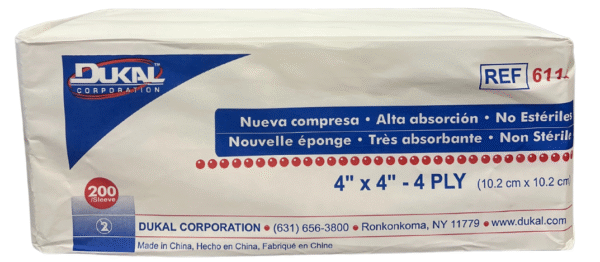
Dukal gauze is a simple and useful option for preparing target-odor soaks, but selecting and preparing it correctly can make an important difference.
I recommend using non-sterile Dukal gauze. In my experience, the sterile version has a strong background odor that may interfere with trace-odor work or introduce an unwanted variable into training.
For particularly low-level or trace odors, the gauze can be rinsed with ethanol to reduce background contamination. Allow the ethanol to evaporate completely in a well-ventilated area away from heat, sparks, and other ignition sources before placing the gauze in a dedicated clean oven to finish drying. This should be an oven reserved for laboratory or odor-preparation work—not the one used for Sunday dinner! Always follow your organization’s safety procedures and the ethanol manufacturer’s handling instructions.
Once dry, store the prepared gauze in a clean Mason jar fitted with a stainless-steel lid. Careful preparation and storage help prevent the gauze from picking up environmental odors before use.
When collecting target odor, use both damp and dry gauze. Different compounds transfer and persist differently, so using both provides a broader and potentially more representative odor sample. Label and store the two types separately to preserve the integrity of each collection.
Dukal gauze is inexpensive, readily usable, and versatile. As with all odor-collection materials, however, cleanliness, preparation, handling, and storage are just as important as the product itself. |
| |
Reading Changes of Behavior |
| |
|
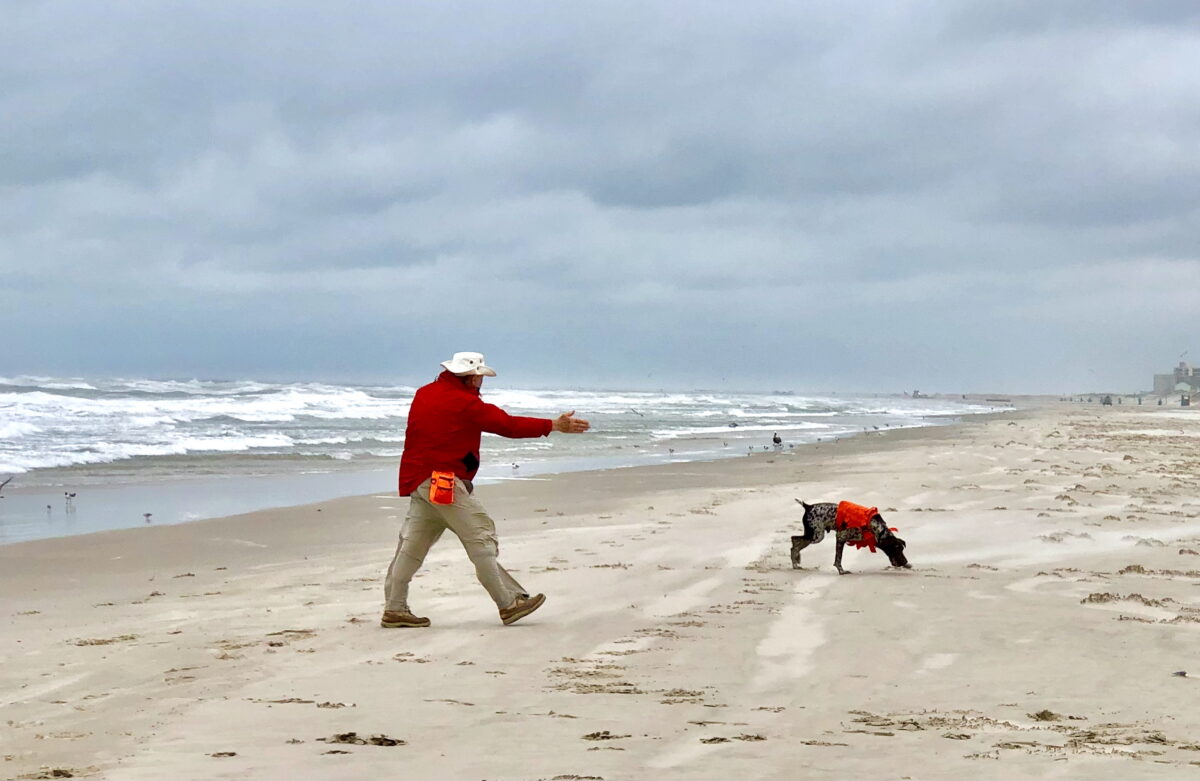
A canine’s change of behavior—often shortened to CoB—is usually the first observable sign that the canine has detected target odor. It happens before the Trained Final Response and may last only a fraction of a second. If the handler is focused only on the final response, valuable information can easily be missed.
A change of behavior might include a sudden head turn, a pause, altered breathing, increased sniffing, a change in pace, a shift in body posture, or an effort to return to a particular area. Some canines become more animated, while others become quieter and more focused. Every canine is different, and the behavior may also vary with odor concentration, airflow, the environment, and the way the canine encounters the odor.
Recognizing a CoB does not mean automatically calling the find. Instead, it tells the handler that the canine has encountered something worth investigating. The handler should allow the canine to work the odor and reach its Trained Final Response without unnecessary prompting or interference.
Handlers must also learn the difference between a response to target odor and interest in a distraction. Food, animal odor, human scent, equipment, environmental contamination, and novel objects can all produce behavioral changes. A target-related CoB will often develop into a more focused and purposeful search pattern, while interest in a distraction may look different or fade once the canine has investigated it.
The best way to understand your canine’s individual behavior is to study it. Record training sessions and watch the footage afterward—ideally more than once and at different speeds. Look at what happened several seconds before the final response. Identify the exact moment the canine first encountered the odor and note the changes in its head, nose, breathing, pace, tail, posture, and search pattern.
Review both successful searches and non-target investigations. Comparing target encounters with distractions will help you recognize the subtle differences between the two.
A final response tells you where the canine completed the trained behavior. The change of behavior helps you understand when the canine first detected the target. Learning to see that moment will make you a more informed handler and a better partner for your canine. |
| |
|
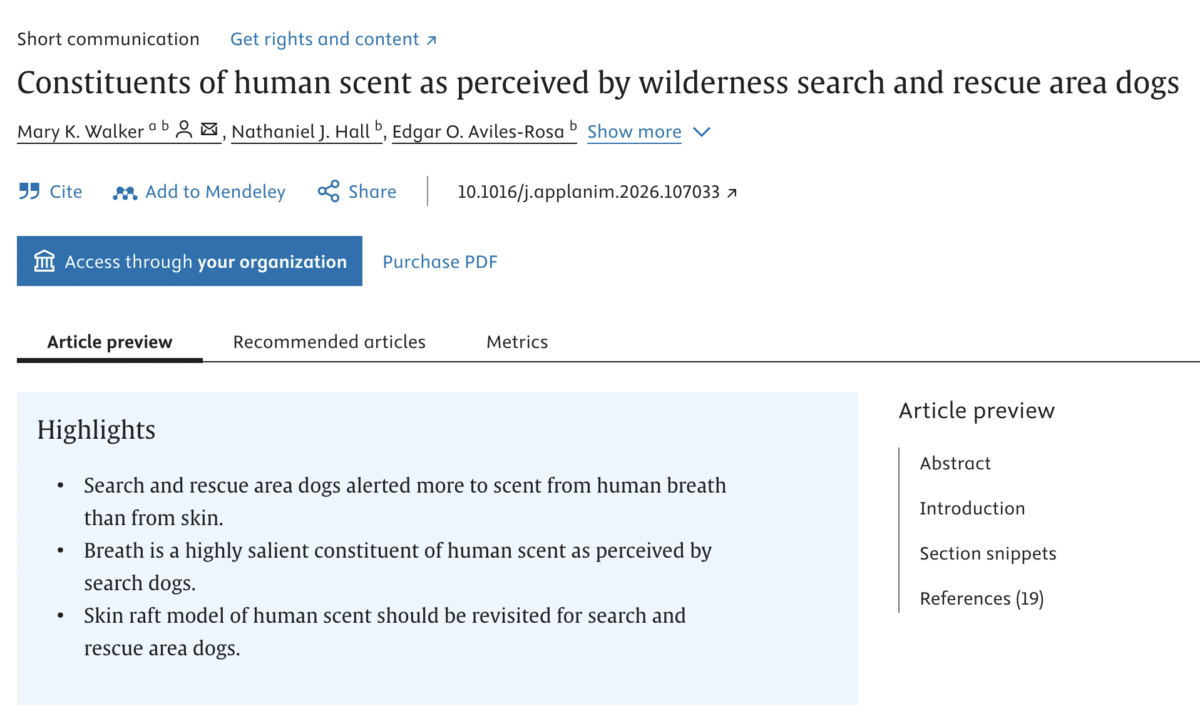
When we talk about the human scent detected by search-and-rescue dogs, the traditional explanation often focuses on “skin rafts”—shed skin cells, associated secretions, bacteria, and the volatile compounds they produce. New research suggests that this picture may be incomplete and that exhaled breath could be an especially important part of the odor dogs use to locate people.
In the study, researchers tested six certified wilderness search-and-rescue area dogs using a controlled, three-choice tunnel system. Air delivered to the tunnels contained one of four conditions: human breath, odor from exposed skin, breath and skin odor together, or clean air as a negative control.
All six dogs showed either a trained final response or a recognizable change of behavior to the breath-only condition and to the combined breath-and-skin condition. Their response speed and likelihood of responding were similar in these two conditions. In contrast, only two dogs responded to skin odor alone, and responses to that condition were less frequent and slower than responses to the combined odor.
These findings suggest that breath is a highly noticeable and meaningful component of human scent for wilderness search dogs. They also challenge the idea that search dogs locate people primarily by detecting odor associated with shed skin cells.
For trainers and handlers, this research encourages us to think more broadly about what constitutes the odor picture of a live person. Airflow, respiration, enclosure, barriers, distance, and the movement of exhaled breath may all influence how human scent becomes available to a searching dog. Training scenarios that unintentionally restrict or exaggerate these elements may not produce the odor picture we assume they do.
However, the study involved only six dogs in a controlled experimental setup. It does not show that skin odor is irrelevant, nor does it fully reproduce the complex environmental conditions encountered during an operational search. Instead, it provides evidence that breath may play a much larger role than traditional human-scent models have acknowledged.
The practical takeaway is not that we should replace one simple explanation with another. Human scent is a complex mixture, and dogs may use different components under different conditions. This study gives us a valuable reason to reconsider our assumptions—and to pay closer attention to how human odor is produced, transported, and encountered during training.
Reference: Walker, M. K., Hall, N. J., and Aviles-Rosa, E. O. (2026). “Constituents of human scent as perceived by wilderness search and rescue area dogs.” Applied Animal Behaviour Science, 300, 107033. DOI: 10.1016/j.applanim.2026.107033
|
| |
|
Looking to advance your skills in detection dog training and handling? Chiron K9 provides tailored mentoring (virtual and in-person), practical workshops, and expert conference presentations worldwide. Whether you’re seeking one-on-one guidance or group learning opportunities, our programs are designed to help you grow with evidence-based practices and real-world experience. |
| |
|
Thank you for reading this issue of The Chiron Briefing. If you enjoyed it, feel free to share it, forward it, or send me suggestions for future topics. Until next month—train well and take care.
Paul Bunker & the Chiron K9 team
|
| |
|