Chiron K9 Chiron K9
Success Through Innovation
The Chiron Briefing

Greetings ,

Welcome to the June Issue of The Chiron Briefing

As we move into summer, Chiron K9 continues to remain busy supporting operational training, research, and canine development projects across multiple areas of detection work. This month, we will be supporting the NIST/OSAC narcotics detection canine trials at Texas Tech University, continuing our commitment to evidence-based training, standards, and operational performance.

We are also excited to welcome several new canines into upcoming projects and programs, with more information to follow as these developments progress.

Training and education continue to be a major focus this month. I will be hosting and teaching both an All-Clear Workshop and a Detection of Buried Targets by Canines Workshop here in Texas, while also supporting a multi-agency training day focused on operational canine capability and collaboration.

The Detection Dog Lab community on Skool continues to grow steadily, and we recently introduced a subscription membership level that now includes premium classes, live virtual calls, resources, and additional training content. It has been encouraging to see handlers, trainers, and operational teams from different disciplines joining the community and contributing to professional discussion and development.

Finally, I would like to thank everyone who has supported the Detection of Buried Targets by Canines workbook. The feedback has been extremely positive, and I am pleased that so many handlers and trainers recognize the operational value of the protocols and concepts within the book.

As always, thank you for your continued support of Chiron K9 and our mission of Success Through Innovation.

-Paul Bunker and the Chiron K9 team

Training Tip

Training Tip: Give Your Dog the Tools to Succeed

IMG_221D89C7CB1A-1

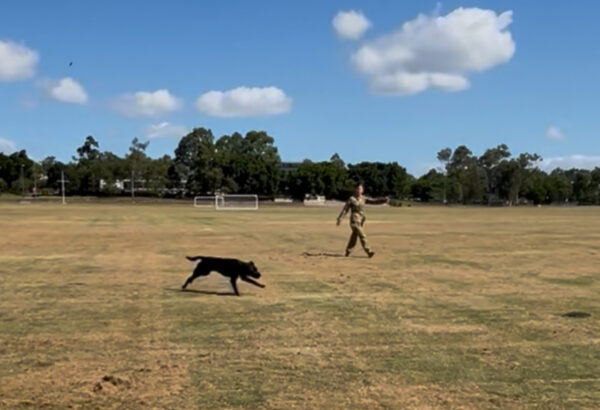
One of the biggest mistakes handlers make is feeling they must constantly help, direct, or correct their dog during training. While guidance is important, confidence is built when the canine learns to solve problems independently.

A reliable detection dog is not one that never makes mistakes. It is one that has learned how to work through uncertainty and continue searching with confidence.

This is why I am a strong advocate for giving dogs tools that support decision-making. The all-clear protocol is a great example. By teaching the canine that not finding a target is still a successful outcome, we remove the pressure to produce an alert when odor is absent. The dog learns that honesty is valuable and that the absence of target odor is just as important as its presence.

Variable reward schedules and variable reward types are equally powerful. Not every find should look the same. Sometimes the reward may be food, sometimes a toy, and sometimes the reward may be larger or more exciting than expected, or no reward at all except to keep searching. This variability helps maintain motivation and builds resilience when rewards are not immediate.

Perhaps most importantly, allow the dog to learn.

Give the canine opportunities to make decisions. Allow it to work through challenges. Resist the temptation to constantly show the dog where the answer is. If every training session becomes a guided tour to the hide, the canine never develops confidence in its own abilities.

Dogs learn through experience, and experience includes making mistakes. Those mistakes should not become negative events. Instead, they should be opportunities for learning. A confident canine understands that it can investigate, problem solve, make decisions, and continue working without fear of being wrong.

Our goal should not be to create dogs that are dependent upon handlers for every answer. Our goal should be to create dogs that trust their nose, trust the training process, and have the confidence to work independently when it matters most.

Give your dog the tools. Give it the opportunity to learn. Then step back and let the training do its job.

Equipment Review

Canine Underwater Search Training Device

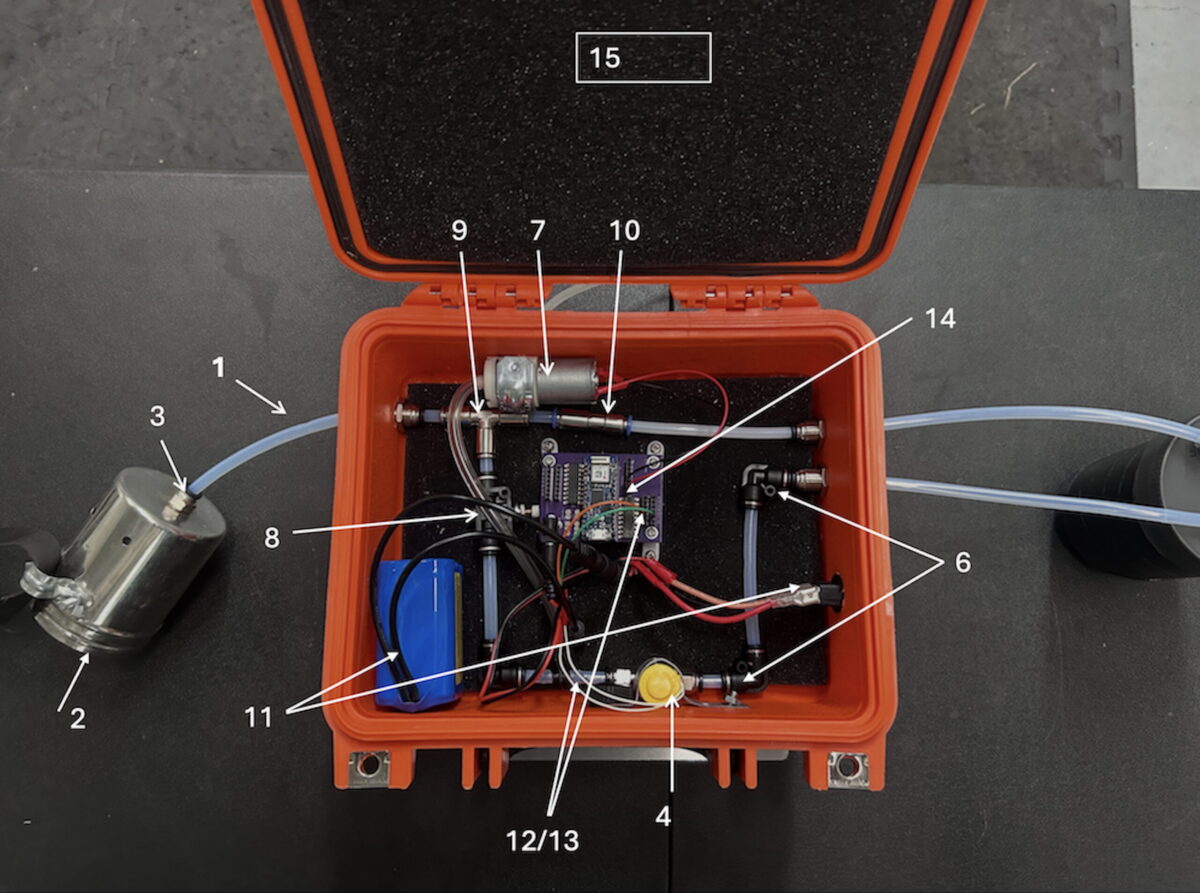
Figure 2

Innovation in detection dog training often comes from solving real operational problems, and the Canine Underwater Search Training Device (CUSTD) is an excellent example of that approach.

I developed this device to safely train canines to detect underwater or submerged targets from the bow of a boat without placing target materials directly into the water source. Using a remotely controlled odor delivery system, trainers can present target odors only when required, allowing for controlled and repeatable training scenarios.

One of the major advantages of the system is that it prevents canines from simply learning a target location. Because odor presentations can be controlled and repeated, the focus remains on odor recognition and search behavior rather than pattern training. The device also removes the environmental concerns associated with placing training aids such as oil directly into waterways.

Originally developed to support underwater oil detection canine research, the concept has wider applications including human remains detection, conservation projects, invasive species work, marine biology, and other aquatic detection roles.

The CUSTD represents the type of practical innovation that helps bridge the gap between laboratory concepts and real-world operational deployment. It provides trainers with a controlled method of developing boat-based detection skills while maintaining environmental responsibility and training flexibility.

I wrote a published paper describing the construction, training protocols and deployment of the CUSTD and it is available for free HERE

Notes from the Field

Education Opportunities

Why I Started The Detection Dog Lab

There has never been a better time to be involved in the canine world.

Whether your interest is detection, conservation, search and rescue, sporting dogs, working dogs, or simply becoming a better trainer, there are more opportunities available today than ever before. Every year, more people enter the canine profession or develop a passion for working and training dogs.

While this growth is encouraging, it also presents a challenge.

The amount of information available today can be overwhelming. Social media provides endless opinions, training videos, and advice, much of it contradictory. It can be difficult for handlers and trainers to determine what information is evidence-based, what is opinion, and what is simply noise.

I believe our industry needs places where people can learn, ask questions, share experiences, and discuss ideas in a professional and supportive environment.

That belief is what led me to create The Detection Dog Lab.

The goal was never to create another social media group. Instead, I wanted to build a community where handlers, trainers, researchers, and canine professionals could come together to discuss detection dog training, odor theory, operational deployments, research, and problem solving. A place where curiosity is encouraged, questions are welcomed, and learning never stops.

The community continues to grow, and it has been encouraging to see members from different disciplines and countries contributing their experiences and knowledge. We have recently added a premium membership option that includes advanced classes, live virtual calls, downloadable resources, and additional educational content to support those looking to take their training and understanding even further.

Education is one of the most powerful tools we have for improving canine performance, handler capability, and ultimately operational success. The more we learn, the better decisions we make for our dogs and the people who depend upon them.

I look forward to continuing to grow The Detection Dog Lab and helping create a place where people can learn, collaborate, and improve together.

After all, success rarely happens by accident. It is built through knowledge, experience, and a willingness to keep learning.

The Detection Dog Lab now has a subscription option to Premium Level which offers live virtual Q&A opportunities twice a month, premium classes and document resources HERE

Science Paper Review
Emma paper

This paper investigated how explosive-related odors move through soil and how environmental conditions affect detection. Laboratory testing showed that moisture, sunlight, and sandy soils significantly improved odor movement to the surface, while organic-rich soils tended to trap and retain odor. The authors concluded that evapotranspiration is a major driver of vapor transport from buried explosives.

Canine trials did not match the laboratory findings. Many explosive detection teams struggled to locate even shallow buried targets, suggesting that burial itself creates a unique detection challenge. The authors noted that many teams lacked experience with buried target searches and may have struggled to generalize from traditional explosive detection scenarios.

The primary takeaway is that buried target detection is a specialized skill. Environmental conditions strongly influence odor availability, and dogs should be specifically trained on buried targets rather than assuming skills from conventional detection work will automatically transfer.

The results of this research support my experience with buried targets detection and is why I developed the buried targets workbook and workshops. 


Upcoming Events

Looking to advance your skills in detection dog training and handling? Chiron K9 provides tailored mentoring (virtual and in-person), practical workshops, and expert conference presentations worldwide. Whether you’re seeking one-on-one guidance or group learning opportunities, our programs are designed to help you grow with evidence-based practices and real-world experience.

13
June

Human Remains Buried Target Workshop – SOLD OUT

Human Remains Detection – Buried Targets WorkshopChiron K9, Somerset, Texas This workshop is…

- 1610 Patton Rd, Somerset, Texas


18
July

Human Remains Buried Target Workshop

Human Remains Detection – Buried Targets WorkshopChiron K9, Somerset, Texas This workshop is…

- 1610 Patton Rd, Somerset, Texas


24
August

Detection Dogs for Conservation – Australia Tour

I’m excited to be returning to Australia for a nationwide tour, with stops planned in Sydney,…

- Australia


11
September

Conservation Canine Workshops

- Queensland


19
September

The Detection of Buried Targets

- South Australia

Events Page

Thank you for reading this issue of The Chiron Briefing. If you enjoyed it, feel free to share it, forward it, or send me suggestions for future topics. Until next month—train well and take care.

Paul Bunker & the Chiron K9 team


facebook  youtube  instagram 
Unsubscribe   |   Manage your subscription

Somerset, Texas, USA